 Grand Rapids Care
Abdominal Muscles in Grand Rapids, MI
Abdominal muscles sit between the ribs and the pelvis at the front and sides of your body. They support your trunk, allow you to bend and twist, and help hold your internal organs in place by regulating pressure inside your abdomen.
In Grand Rapids, strong abdominal and core muscles are especially important for people who:
- Shovel snow and walk on icy sidewalks during long West Michigan winters
- Enjoy outdoor activities along the Grand River, Millennium Park, and local trail systems
- Work in physically demanding jobs in manufacturing, healthcare, and construction across the Grand Rapids metro area
- Spend long hours sitting or commuting on I‑196, US‑131, and M‑6
Because Michigan’s cold winters and slippery conditions increase the risk of falls and back strain, maintaining strong abdominal muscles is a key part of staying active and independent in Grand Rapids.
If you have abdominal pain, muscle strain, or a sports-related core injury, it’s important to get a proper diagnosis from a Grand Rapids healthcare professional, such as a primary care doctor, physical therapist, chiropractor, or sports medicine physician.
Main Abdominal Muscle Groups
Four main abdominal muscle groups work together to cover and support your internal organs and stabilize your spine.
Transversus Abdominis (Deep Core Muscle)
- Deepest layer of abdominal muscle
- Wraps around your trunk like a natural “corset”
Main roles:
- Stabilizes the spine and pelvis
- Helps maintain internal abdominal pressure
- Supports posture during daily activities—from walking downtown Grand Rapids to shoveling your driveway in January
Rectus Abdominis (“Six-Pack” Muscle)
- Runs vertically from the pubic bone up to the ribs
- Forms the familiar “six-pack” appearance when well developed
Main function:
- Moves the body between the ribcage and pelvis
- Helps you bend forward (as in a sit-up) or get up from bed or a chair
External Oblique Muscles
- Located on each side of the rectus abdominis
- Run diagonally from the ribs down toward the pelvis
Main function:
- Allow the trunk to twist and bend sideways
- Work in an opposite-side pattern:
- Right external oblique helps turn the body to the left
- Left external oblique helps turn the body to the right
These muscles are active when you rotate to look over your shoulder while driving on US‑131, backing out of a parking spot near Van Andel Arena, or swinging a golf club at a local West Michigan course.
Internal Oblique Muscles
- Located just underneath the external obliques, closer to the hip bones
- Run in the opposite diagonal direction to the external obliques
Main function:
- Assist with trunk twisting and side bending
- Work together with the external obliques in a coordinated way
For example, twisting your trunk to the left uses:
- Left internal oblique
- Right external oblique
This coordinated action is important in many sports popular in the Grand Rapids area, including tennis, baseball, hockey, and recreational pickleball at local parks and community centers.
Core Muscles and Spine Support
Think of your core as a strong column that links your upper and lower body. In a city like Grand Rapids—where people regularly deal with snow, ice, yard work, and active outdoor lifestyles—core strength is essential for preventing injury.
Your abdominal and back muscles work together to:
- Support the spine when you sit, stand, bend, and lift
- Maintain balance on icy sidewalks and slushy parking lots in winter
- Protect your back during activities like snow shoveling, raking leaves, gardening, and recreational sports
Key Core Muscles
Core muscles include the deep muscles of the abdomen and back that attach to the spine or pelvis, such as:
- Transversus abdominis
- Oblique muscles (internal and external)
- Pelvic floor muscles
- Multifidus – a deep back muscle running along the spine that:
- Works with the transversus abdominis
- Increases spinal stability
- Helps protect against back injury or strain during movement and everyday posture
In Michigan, low back pain is common due to heavy lifting (snow, yard debris, work tasks), winter falls, and prolonged sitting during long commutes or office work. Proper core strengthening—ideally guided by a qualified Grand Rapids physical therapist or exercise professional—can significantly reduce the risk of chronic back pain.
Effective Abdominal and Core Exercises in Grand Rapids
When adding abdominal exercises to your fitness routine in Grand Rapids, focus on training the entire core, not just the surface “six-pack” muscles. Choose exercises that improve stability, balance, and functional strength for real-life activities—like walking on snowy sidewalks, carrying groceries, or playing with your kids at local parks.
Pilates
Pilates (pronounced “Pi-lah-teez”) is a form of exercise originally used by dancers for deep-body conditioning and injury rehabilitation.
Benefits of Pilates for core strength:
- Strengthens deep core muscles that support the spine
- Improves posture and flexibility
- Enhances body awareness and control
Many fitness centers, yoga studios, and physical therapy clinics in Grand Rapids offer Pilates-based core training, including:
- Hospital-affiliated rehab programs (e.g., Spectrum Health/Corewell Health and Trinity Health Grand Rapids outpatient rehab)
- Private physical therapy clinics and wellness studios throughout the metro area
Pilates can be especially helpful if you have a history of back pain, are recovering from injury, or want a low-impact way to build core strength during Michigan’s colder months when outdoor exercise is limited.
Stability Ball (Exercise Ball) Training
A stability ball (also called a Swiss ball, fitball, or exercise ball) is a large inflatable ball used to:
- Improve balance and coordination
- Challenge core stability
- Target specific abdominal and back muscle groups
You can use a stability ball at home or in a Grand Rapids gym to:
- Perform modified crunches and planks
- Practice balance exercises that mimic standing on uneven or slippery surfaces
- Strengthen the muscles that support your spine and pelvis
Many local gyms and community fitness programs in Grand Rapids incorporate stability ball exercises into core classes, making it easy to add this type of training to your routine.
Preventing Abdominal Muscle Strains in West Michigan
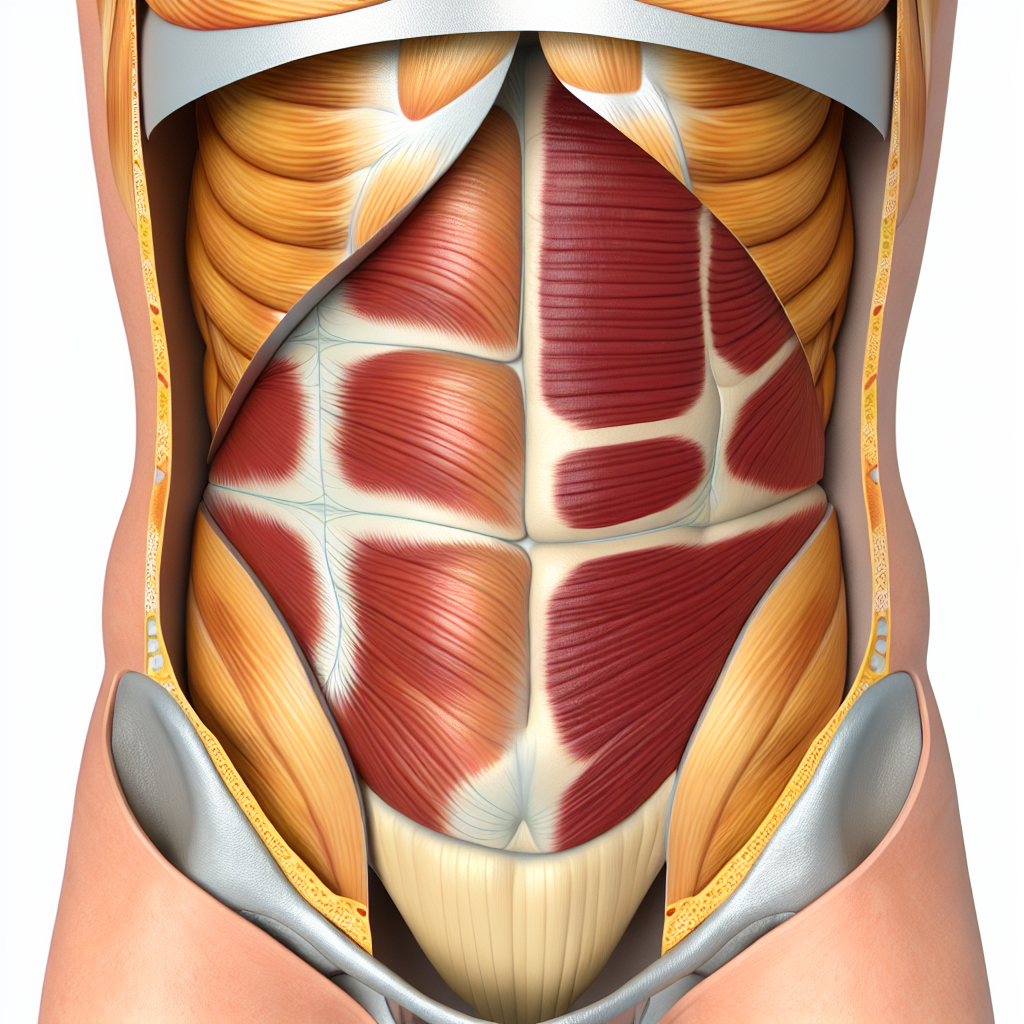
Layered view of abdominal muscles
Abdominal muscle strains can happen when the muscle fibers are overstretched or torn. In Grand Rapids and the broader West Michigan region, these injuries are especially common during seasonal changes, when people suddenly increase activity—such as the first big snowstorm or the start of spring yard work.
Abdominal muscle strains can result from:
- Overstretching
- Sudden twisting or lifting
- Overuse during sports or exercise
This is common in activities like:
- Shoveling heavy, wet snow during lake-effect storms
- Playing recreational sports at local parks, schools, and sports complexes
- Starting a new workout routine too quickly at a Grand Rapids gym or fitness class
- Weekend projects like moving furniture, home renovations, or landscaping
Prevention Tips
To help prevent abdominal muscle strains:
- Warm up before exercise or sports (5–10 minutes of light activity such as walking or gentle cycling)
- Stretch regularly, especially after workouts and physical labor
- Use proper form when lifting, twisting, or playing sports—bend at the hips and knees, keep objects close to your body, and avoid sudden jerking motions
- Increase intensity gradually when starting a new fitness program or returning to activity after a long Michigan winter
- Strengthen your core with exercises that target deep abdominal and back muscles, not just traditional sit-ups
Remember: your abdominal muscles and back muscles work together as your core. A strong core helps keep your body stable and balanced and protects your spine during daily activities in Grand Rapids—from walking on Wealthy Street to clearing snow from your driveway.
When to See a Healthcare Professional in Grand Rapids
Seek medical advice right away if you experience:
- Sudden, sharp abdominal pain during activity
- Pain that worsens with movement, coughing, or deep breathing
- Swelling, bruising, or tenderness in the abdominal area
- A visible bulge in the abdomen or groin (which may suggest a hernia)
- Ongoing back or core pain that doesn’t improve with rest, ice/heat, or over-the-counter pain relievers
Local Healthcare and Sports Medicine Resources
In Grand Rapids, MI, you can discuss abdominal muscle injuries, core strengthening, and sports-related strains with:
- Primary care doctors – for initial evaluation, diagnosis, and referral
- Sports medicine physicians – for athletic injuries and customized rehab plans
- Physical therapists / physiotherapists – for guided core strengthening, posture training, and injury recovery
- Chiropractors and osteopathic physicians (DOs) – for musculoskeletal assessment and manual therapy when appropriate
- Exercise physiologists and certified trainers – for safe, personalized exercise programs
Major healthcare providers in the Grand Rapids area that offer evaluation and treatment for abdominal and core muscle issues include:
- Spectrum Health (Corewell Health) in Grand Rapids – primary care, sports medicine, physical therapy, and hospital-based rehab
- Trinity Health Grand Rapids – comprehensive rehabilitation and sports medicine services
- Metro Health – University of Michigan Health – orthopedic, spine, and sports medicine care
- Mercy Health–affiliated locations in West Michigan – primary care and rehab services
You can also access community health information and preventive care resources through:
- Kent County Health Department – education on physical activity, weight management, and chronic disease prevention
- Grand Rapids public health and community wellness programs – local initiatives that encourage safe exercise, fall prevention, and healthy living
These organizations often provide classes, screenings, and educational materials on injury prevention, physical activity, and maintaining a healthy weight—all of which support strong abdominal and core muscles.
Key Points to Remember
- The main abdominal muscles—transversus abdominis, rectus abdominis, and the internal and external obliques—support your trunk, allow movement, and help hold your organs in place.
- Deep abdominal and back muscles form your core, which stabilizes your spine, improves balance, and helps prevent injuries—especially important in Grand Rapids’ icy winter conditions.
- Effective core training (such as Pilates, stability ball exercises, and functional strength training) is safer and more beneficial than doing only traditional crunches.
- Seasonal activities common in West Michigan, like snow shoveling, winter sports, and spring yard work, can increase the risk of abdominal and back strains—proper warm-up, stretching, and lifting technique are essential.
- For persistent pain or suspected abdominal muscle injury, consult a Grand Rapids healthcare provider, physical therapist, or sports medicine specialist for an accurate diagnosis and a personalized treatment plan.